The short answer
The future of money points to cryptographic protocols and to markets designed around our emotions, and cyberpunk fiction is a good map for thinking about the risks and opportunities on that path. It does not have to be dystopian: technology is neutral, and the outcome depends on how society chooses to use it.
What does the future hold for us? Today we can talk about the market of protocols and cryptography as an evolution of the financial system we have used throughout the history of modern society. That is good because we can test and choose the best economic model, boost our evolutionary, technological and scientific process and reduce problems such as inequality.
We have gone through many upgrades in the means of exchange throughout history, and today countless markets are moving toward what we feel. Yes, they are moving toward our emotions. Just look at marketing and psychology as fields of study, or at apps and social networks designed to stimulate their users' dopamine. Knowing that, let me introduce a few concepts.
Altered Carbon and the Cortical Stack
In Altered Carbon, Richard K. Morgan's science fiction novel, space travel, consciousness as data and emotions as currency are no longer impossible. In that future, humans have found immortality through technology.
At the center of the idea is the Cortical Stack, a vertebra-shaped disc inserted at the base of the skull that stores the memories, experiences and personality of whoever carries it. True death only happens if the disc is destroyed, and even that can be worked around with a backup copy, for a price. The body becomes a temporary "sleeve", and the digitized consciousness can be placed in another body in a process called re-sleeving. Every human being gets their stack from the first year of life.
It sounds distant, but some people are already working on it. Russian billionaire Dmitry Itskov, for example, announced a project to transfer human minds into a computer, according to BBC News Brasil. The idea behind it, mind uploading, is exactly that of a Cortical Stack.
Neuromancer and cyberpunk at the center of the world
In William Gibson's Neuromancer, cyberpunk dominates society. There, technology in the body stops being a choice and becomes a condition of existence, since human potential is maximized through implants. It is the path we may be on with CRISPR, cryptography, the metaverse, augmented reality and AI.
Most cyberpunk works show a world where technology has maximized human potential, physical and mental, but also a socioeconomic inequality never seen before. That is only one possible future. There is no crystal ball that predicts how we will live, and not everything in cyberpunk is pessimism.
In the Alita trailer, an artificial body houses a human consciousness.
What is cyberpunk?
Cyberpunk is a subgenre of science fiction that has spread beyond literature into films, series and games. And when we talk about innovation, it is worth remembering that science fiction anticipates movements, technology and even human behavior. They say life imitates art, but perhaps literature is the greatest tool for writing and shaping the future. How will we conceive something if we do not imagine it? And if we imagine it, how will we share it if we do not write it?
Literature was an overwhelming technology, and today we have the World Wide Web, where we share videos, photos, texts, experiences and sensations, and live together as a society inside a cyberspace. We could say the internet is the evolution of literature in that sense.
By name, we have cyber, from cybernetic, and punk, from rebellion. But many people forget that technology is, by nature, neutral: negative and positive impacts come from the interaction between technology and human behavior. By interpretation, I propose three readings:
- Cyberpunk A1. Technology, allied with society, rebels against the political or corporate sovereignty that oppresses it. Little explored to date.
- Cyberpunk A2. Technology in rebellion against humanity, widely explored in the 1980s with humanoid automatons and AI.
- Cyberpunk A3. Humanity completely dependent on technology, widely explored in recent years, with impacts we can already see in the present.
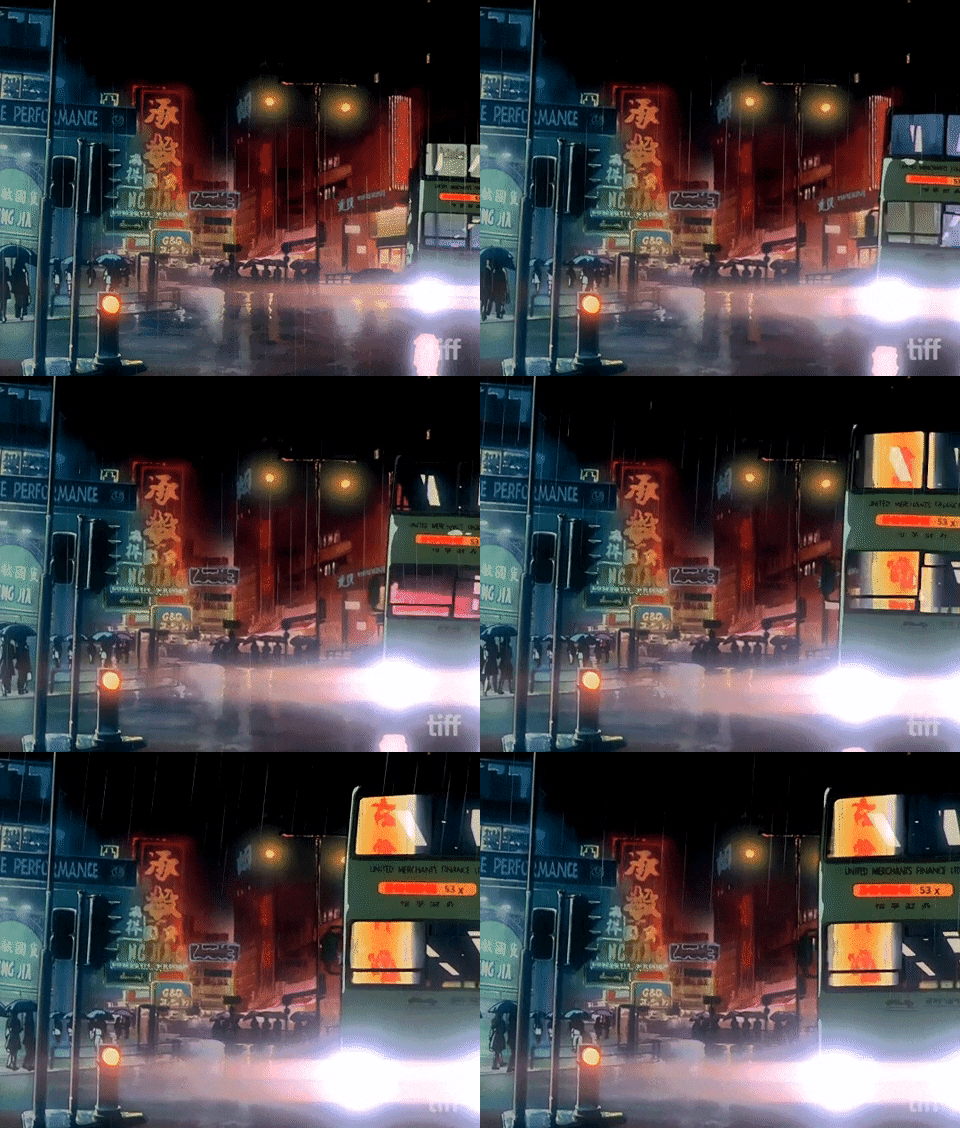
Conceitos.com sums up the setting well: urban tribes that oppose the system, a pseudo-apocalyptic atmosphere, artificial intelligence, genetic engineering and multinationals that replace political power, in a cybernetic and decaying urban landscape of graffiti and neon lights. From there come the questions the genre always asks: will we be dominated by artificial intelligence? Are we able to master technology? Will our individual self be the same when cybernetics and genetic engineering set us apart? When our experiences are stored on a chip, will we still be ourselves?
An optimistic cyberpunk world
In an optimistic cyberpunk, technology advances to the point of making life easier. Cities gain futuristic buildings and drones, people use implants to improve physical and mental abilities, and virtual realities become common. But, unlike the typical setting, people live in harmony with technology and society is fair. Technology serves humanity rather than controlling it.
That involves free will. Technology can widen our choices or be used to control behavior. That is why it must be used responsibly and ethically, respecting people's ability to decide.
And it involves death. Technology helps extend life, but we still have no evidence it can defeat death. We can slow aging, treat heart disease and diabetes, and use tissue regeneration and genetic engineering to repair organs damaged by time.
Humans, cyborgs and X-humans
We are almost cyborgs already, with a phone in hand every second of the day. Terms like cyborgs, hybrid humans or technological humans describe people enhanced by technology, but it is unlikely we will stop being human. Technology improves our capabilities, and we will remain human beings, always.
Human artificiality, the incorporation of technology into the body, is likely to grow: implants for memory and processing speed, prostheses for lost limbs and, in my opinion the most interesting case, the repair or replacement of tissues and organs damaged by time or disease.
Frequently asked questions
What is the Cortical Stack? It is the disc implanted in the neck, in Altered Carbon, that stores a person's digitized consciousness and allows it to be moved to another body.
Does mind uploading exist yet? No. It is an area of research and ambitious projects, like Dmitry Itskov's, with no consciousness transferred to date.
Is the peak of evolution the decline?
Money became data, emotions became a market and the body may become a platform. The question is yours: is the peak of evolution the decline, or the beginning of something better?
Douglas Henrique, DOUVRAS Labs. Originally published on LinkedIn on February 10, 2023.
References
Morgan, R. K. Altered Carbon. Del Rey, 2003 (1st ed. Gollancz, 2002). ISBN 9780345457684. Open Library.
Gibson, W. Neuromancer. Ace Books, 1984. ISBN 0441569595. Open Library.
BBC News Brasil. Russian billionaire wants to transfer his brain to a computer and 'immortalize' it (in Portuguese), 2016. Link.
Wikipedia. Mind uploading (in Portuguese). Link.
Conceitos.com. Cyberpunk concept (in Portuguese). Link.