The short answer
AI helps with compliance when it does the reading: it follows the sources of regulation that matter to the company, summarizes what changed with the source passage alongside, and points out which areas, contracts and procedures may be affected. Interpretation and the decision on what to do stay with the legal team or the compliance officer, and every alert must be checkable against the original text.
Have you ever found out about a new rule only when a client, an inspector or a competitor mentioned it? This article shows where AI fits into that routine, where it should not decide on its own and how to start with a small scope.
Why tracking legislation became continuous work
Brazilian law itself admits that change needs time to be absorbed. Complementary Law No. 95/1998, which governs how laws are drafted, says in article 8 that the effective date must be set so as to allow a reasonable period for the law to become widely known. The period exists. It is the company that has to use it to adapt.
And compliance rules call for constant monitoring, not a yearly review. Decree No. 11,129/2022, which regulates the Brazilian Anti-Corruption Law, assesses integrity programs against parameters that include risk management with periodic analysis and reassessment (art. 57, V) and continuous monitoring of the program (art. 57, XV). On data protection, the LGPD, Brazil's data protection law, provides in article 50 for a privacy governance program that is constantly updated based on continuous monitoring and periodic assessments, and for good-practice rules that are published and updated periodically.
Nobody disputes that this is necessary. The problem is volume: many sources, many long texts and few people to read everything and link each change to what the company does.
Running to stay in the same place
In Through the Looking-Glass, by Lewis Carroll, published in 1871, Alice runs hand in hand with the Red Queen and, when they stop, realizes she is still under the same tree. The Queen explains: "Now, here, you see, it takes all the running you can do, to keep in the same place. If you want to get somewhere else, you must run at least twice as fast as that!"
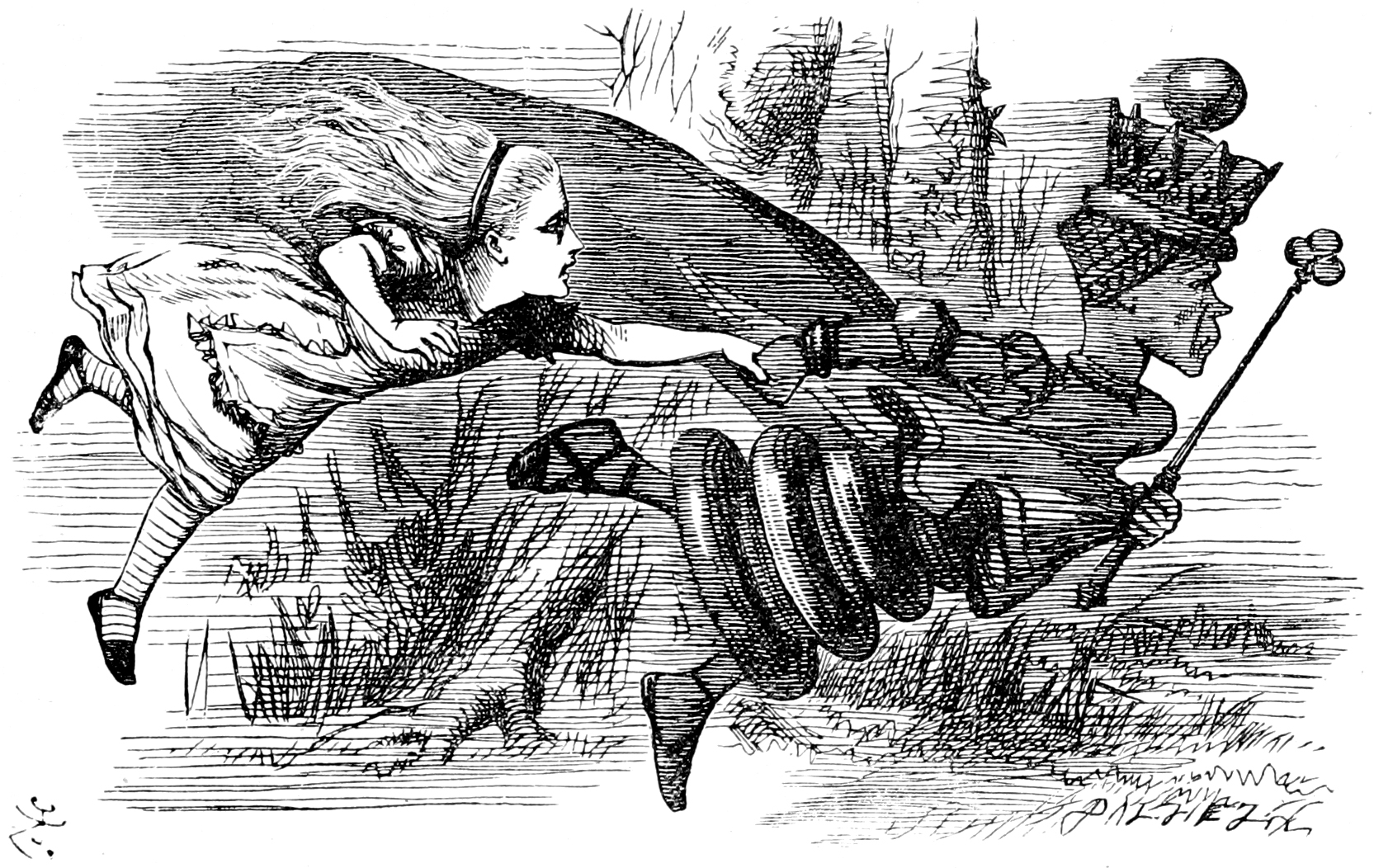
Compliance has a bit of that. Reading new regulations only keeps the company in place. The real gain shows up when reading becomes fast enough to leave time to decide and adapt processes before the change turns into a problem.
Where AI helps with compliance
The DOUVRAS vertical for local AI for law and accounting firms has a product for this, ComplianceShield, described as monitoring of legislative changes, regulatory risk assessment and compliance reports. In practice, the work splits like this:
Defined sources. The company chooses which official gazettes, agencies and regulations to follow. The assistant only reads what is on that list.
Triage. Separating, in each day's batch, what has nothing to do with the company from what touches its activity.
Summary with source. For each relevant regulation, stating what changed, when it takes effect and quoting the exact passage of the official text.
Impact map. Cross-checking the change against what the company has already documented: internal policies, template contracts, procedures and the owners of each area.
Report. Gathering the week's items into a document that the compliance officer reviews, approves or discards.
What AI should not decide on its own
A language model is good at reading long text and finding what it says. Interpreting a regulation, weighing the risk and deciding what the company will do is legal work. In the design we use, each part does what it is good at:
The model reads and summarizes. Always with the source passage and the link to the regulation, so anyone can check it in seconds.
The rule organizes. Effective dates, owners and the status of each item live in a fixed register, not in the model's memory.
A person decides. An alert only becomes a task, a policy change or a contract review after someone from legal or compliance approves it.
This design follows the scope of the DOUVRAS service for AI agents and assistants: a knowledge base with declared sources, tests, guardrails, an escalation flow, logs, costs and shutdown criteria. Connecting to email, spreadsheets and internal systems is automation and integrations work, with logs, alerts and contingency.
Why run it on the company's own server
To cross-check a new regulation against contracts, policies and procedures, the assistant has to read internal documents, and those documents usually contain data about clients, suppliers and strategy. The vertical's published guarantees are local processing, with open models running on the firm's own server and no external APIs; access control per user and per folder; encrypted communication and local backup with the client's own keys; and usage logs for internal auditing.
That usage log matches what the rules ask for: the LGPD speaks of demonstrating the effectiveness of the governance program, and a history of who read, approved or discarded each alert helps show the work that was done. Running locally does not, on its own, settle the company's obligations, as we explained in the article on LGPD, attorney confidentiality and local LLMs.
How to start without building a new department
Pick one topic. Data protection, an obligation specific to your sector or the rules of one agency, not the entire body of law.
List the sources. Which official publications and which internal documents the assistant may read.
Run in parallel. For a few weeks, the AI produces the report while the team keeps tracking the current way. The two lists are compared.
Define when to switch it off. If the assistant misses relevant regulations or raises meaningless alerts beyond what the company accepts, it goes back for adjustment or is retired.
Frequently asked questions
Does AI replace the lawyer or the compliance officer?
No. It reads, summarizes and organizes, always with the source passage. Interpreting the regulation and deciding what to do stay with whoever is accountable for it in the company.
Does AI guarantee that no change will go unnoticed?
No. It only follows the sources that were defined, which is why the project starts with a source list reviewed by the legal team and a parallel period to measure what it catches and what it misses.
Is it only for law firms?
No. The vertical was designed for law and accounting firms, and the published specializations include corporate and labor compliance. The same design works for a company that runs its own compliance program.
Where DOUVRAS comes in
DOUVRAS works with professional services, such as firms and consultancies. In a compliance project, we map the sources of regulation and the path from an alert to a decision, install the model on the client's server, connect the assistant only to authorized folders and deliver tests, operating limits, logs and shutdown criteria. DOUVRAS is not a law firm: the technical side is ours, the legal judgment is yours. To see the same design applied to court cases, read how to use AI to track legal deadlines and case updates.
And here is the question: in your company, how long does it take between a regulation being published and someone accountable knowing it exists?
Douglas Henrique, DOUVRAS Labs.
References
Brazil. Complementary Law No. 95, of February 26, 1998, art. 8. planalto.gov.br
Brazil. Law No. 12,846, of August 1, 2013 (Anti-Corruption Law), art. 7, VIII. planalto.gov.br
Brazil. Decree No. 11,129, of July 11, 2022, arts. 56 and 57. planalto.gov.br
Brazil. Law No. 13,709, of August 14, 2018 (General Personal Data Protection Law, LGPD), art. 50. planalto.gov.br
Carroll, Lewis. Through the Looking-Glass, and What Alice Found There. Originally published in 1871. Project Gutenberg
DOUVRAS Labs. Local AI for law and accounting firms. douvras.com