The short answer
To turn your ERP export into an automatic income statement, you connect an importer to the CSV or Excel file the system already produces, map each entry to a line in the chart of accounts and let the calculation of net revenue, gross profit and the bottom line run on its own every month. AI helps suggest the category of new entries, but the classification rules belong to you and your accountant, and the automatic income statement is a management report: it shows the result so you can decide, it does not replace the official statement.
Have you ever exported the ERP report at the end of the month, opened the spreadsheet, seen thousands of rows and closed it again without knowing whether the company made a profit? This is one of the most common problems we hear from small businesses: the data exists, but nobody turns it into an answer. This article shows how we build that bridge.
What the income statement is and why the ERP export is not one yet
In Brazil the income statement is called DRE, the demonstração do resultado do exercício. The Brazilian Corporations Law, in article 187, lists what it must show: gross revenue, deductions and sales taxes; net revenue, the cost of goods and services sold and gross profit; selling, financial, general and administrative expenses; and, at the end, the result before income tax and the net profit or loss.
The same article has a detail that changes the project. Paragraph 1 requires counting the revenue earned in the period, regardless of whether it has been received in cash, and the costs and expenses that correspond to that revenue, whether paid or incurred. In other words, the income statement follows the accrual basis, not cash. An October sale paid in installments goes entirely into October, even if the money only arrives in December.
That is why the bank statement or the ERP report of paid bills is not an income statement. It is the raw material. For a small business, a management income statement does not need every line the law lists, but it needs the same logic: revenue for the period, minus what it cost to generate that revenue, minus what it cost to keep the company open.
Reading the green code: from raw report to result
In The Matrix, from 1999, the activity of the simulated reality appears on screen as falling green characters, the effect known as digital rain, which opens the films in the series. The image is beautiful, but for anyone who looks at it without knowing what each character stands for, it is only noise.
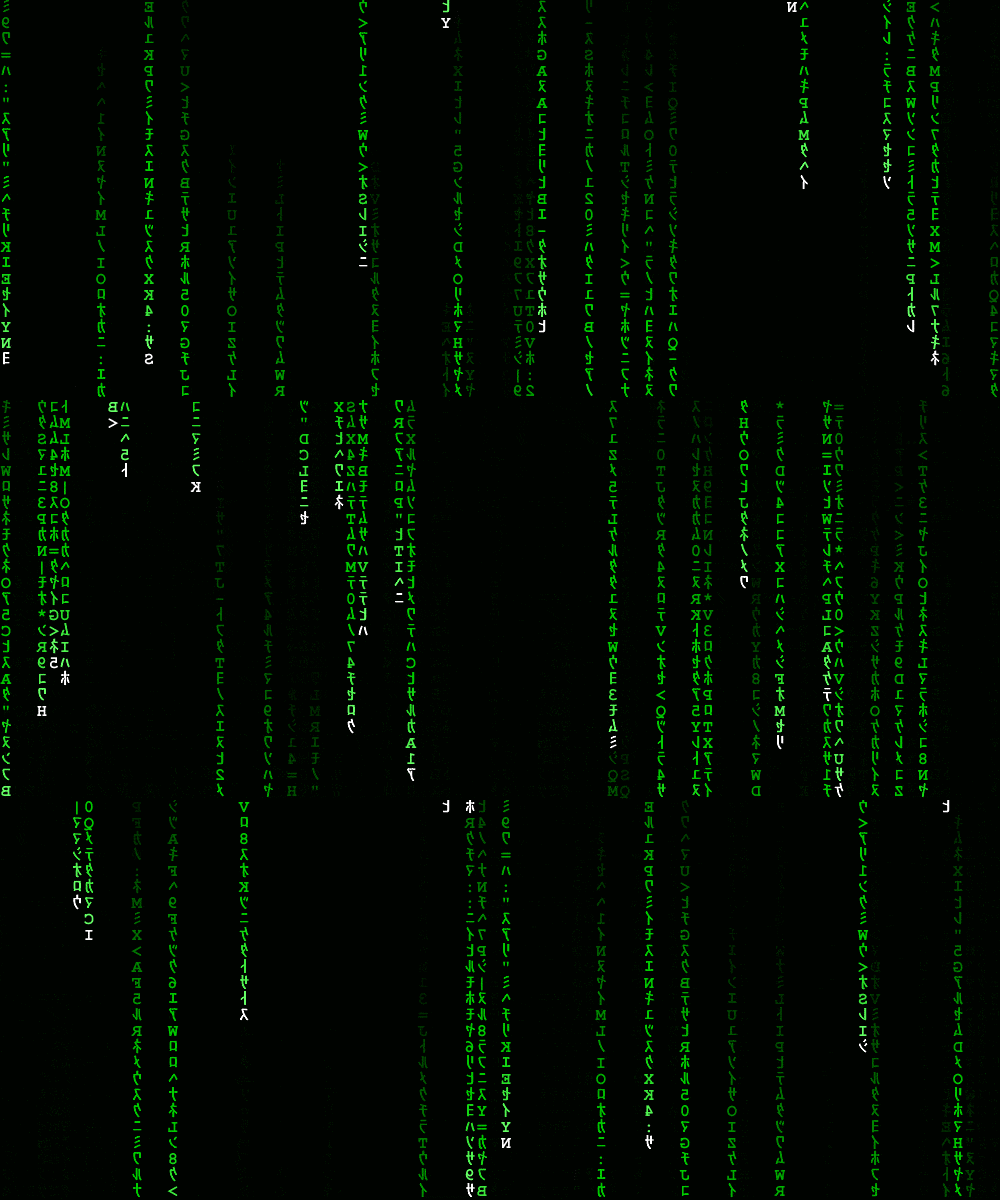
The ERP export is the business owner's green rain. Each row has a date, an amount, a description and sometimes a cost center, but nobody reads ten thousand rows to find the margin. Automation plays the part of someone who can read the code: it translates the rain into four or five numbers that answer the question that matters.
How the automation works, piece by piece
In our design for small retailers, service providers, clinics, agencies, restaurants and repair shops, the delivery has these parts.
- CSV or Excel importer. It reads the file the ERP already exports, exactly as it comes out, without asking anyone to reformat the spreadsheet.
- Automatic categorization. Each revenue and each expense goes to a line in the chart of accounts by rule, and whatever the rule does not recognize goes to a review queue.
- Monthly income statement. Gross revenue, deductions, net revenue, costs, gross profit, expenses and result, always calculated the same way.
- Charts and dashboard. Month-by-month evolution in a web dashboard, so you can compare without opening a spreadsheet.
- Alerts. A warning when a line breaks the pattern, such as an expense that doubled or a margin that fell.
- PDF report and automatic delivery. The month-end close arrives by email or WhatsApp on the agreed date.
The hardest part is rarely the code. It is sitting down with whoever runs the finances and defining the chart of accounts: what is a cost, what is an expense, where the card machine fee goes, where the owner's draw goes. Without that conversation, automation only produces a faster mistake.
Where AI helps and where it should not decide
AI is useful for categorization. Entry descriptions often come in messy, with abbreviations and supplier names that change, and a language model can suggest the likely category based on the history already classified. It also helps write a plain-language summary of the month, pointing out what changed.
What it does not do is invent accounting rules. The suggested category goes to review until the rule is stable, every reclassification is logged, and the accountant remains responsible for the bookkeeping and the official statements. The automatic income statement gives the owner a reliable monthly reading; it does not sign a balance sheet.
Peter Drucker wrote in the Harvard Business Review in 1963: "There is surely nothing quite so useless as doing with great efficiency what should not be done at all. Yet our tools—especially our accounting concepts and data—all focus on efficiency." A well-designed automatic income statement tries to answer that criticism: it is not there to close the spreadsheet faster, but to show where the company makes and loses money.
Pacioli and the rule of not going to sleep with the books open

In 1494, the friar and mathematician Luca Pacioli published the Summa de arithmetica in Venice, which included one of the first printed descriptions of the double-entry method used by Venetian merchants. He described journals and ledgers and advised not going to sleep until the debits matched the credits.
Five centuries later, the rule still holds. The difference is that the close no longer has to depend on someone staying up at night checking a spreadsheet. The check becomes routine: if the sum of what was imported does not match the file total, the system warns you before generating the income statement.
Frequently asked questions
Do I need to change my ERP to get an automatic income statement? No. The starting point is the export your system already produces. If it has an integration, that can replace the file later.
Does the automatic income statement replace the accountant? No. It is a management report for day-to-day decisions. The bookkeeping and the official statements stay with the accountant, who also helps define the chart of accounts.
What if the ERP exports entries on a cash basis? It can work, but installment sales and expenses paid before or after the month need to be handled so the statement follows the accrual basis. That rule is agreed at the start of the project.
Where DOUVRAS comes in
DOUVRAS Labs builds this flow under automation and integrations, with a map of the current flow, failure handling, logs and alerts, and under custom software, when the dashboard needs to grow with the operation. It is a kind of work we have already handled: income statements, ERP exports, Excel Online and Power Automate. We start with a diagnostic conversation that defines the bottleneck and what stays out of scope.
And in your company, when someone asks how much was left last month, does the answer come from a calculated number or from a guess?
Douglas Henrique, DOUVRAS Labs.
References
Brazil. Law No. 6,404 of December 15, 1976 (Corporations Law), article 187. planalto.gov.br
Drucker, Peter F. Managing for Business Effectiveness. Harvard Business Review, May 1963. hbr.org
Luca Pacioli. Wikipedia. wikipedia.org
Digital rain. Wikipedia. wikipedia.org
Wachowski, Lana; Wachowski, Lilly. The Matrix. Warner Bros., 1999.